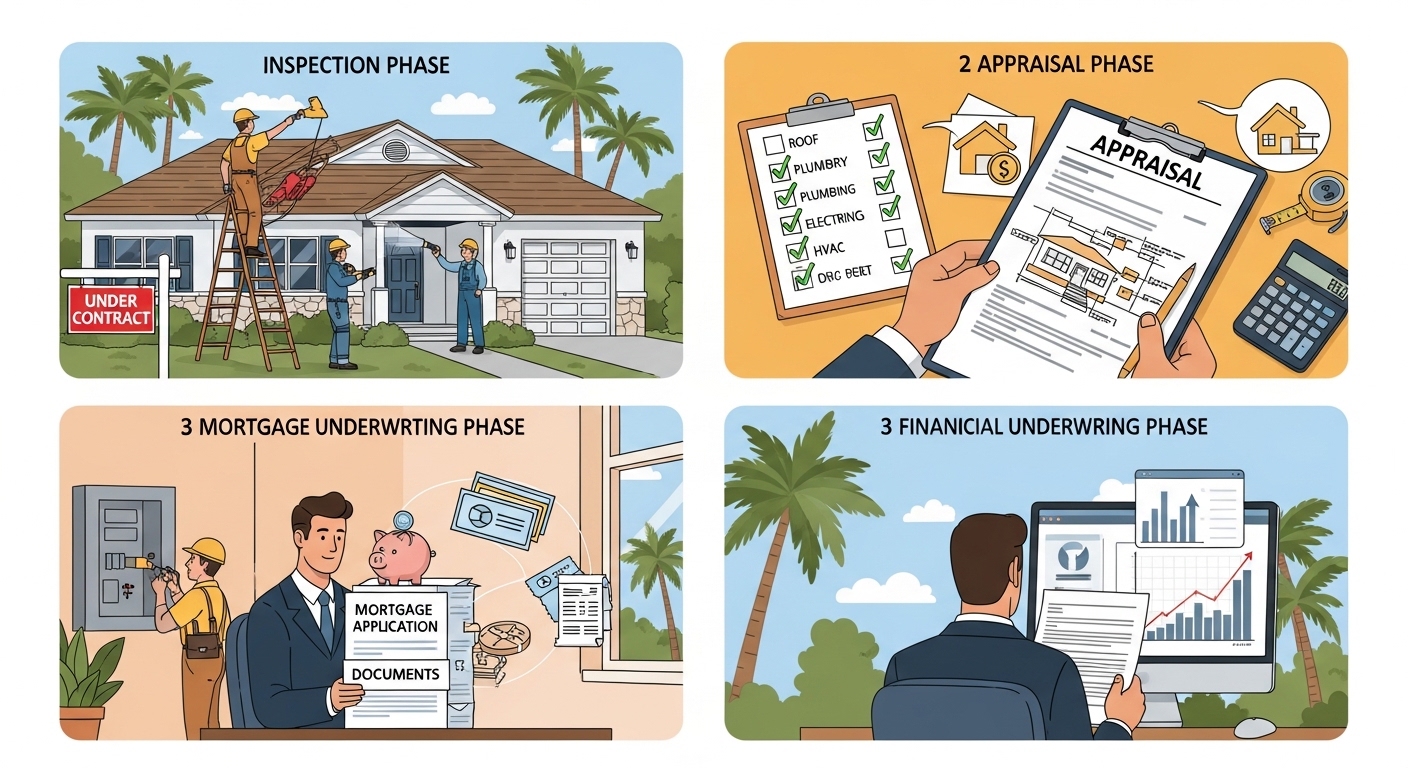
Steps After Going Under Contract: Your Closing Roadmap
You did it! You found the right property in Boca Raton, made an offer, and the seller accepted. Now comes the moment where many first-time homebuyers feel like they're in the dark. You're under contract, yes, but there's still a significant journey ahead before you hand over those keys and walk into your new home. The weeks between offer acceptance and closing are packed with critical steps, decision points, and potential roadblocks. Let me walk you through what's coming and how to navigate each phase with confidence.
The Home Inspection: Your First Major Decision Point
Within days of your offer being accepted, you'll need to schedule your home inspection. The contract resolution period typically runs three to 14 days after offer acceptance, and you should book your inspection within 24 hours of going under contract to preserve time for follow-up specialty inspections. A typical inspection takes 2–4 hours on site depending on the home's size, age, and condition.
Here's what I tell my clients: the inspection is your protection. 86% of home inspections uncover at least one issue that needs attention, and buyers who use inspection findings to negotiate save an average of $14,000. The inspector checks everything from the foundation and roof to electrical systems, plumbing, and HVAC equipment. Most inspectors deliver their report within 24–48 hours.
Dealing with Deal-Breakers: Know When to Negotiate or Walk Away
When that inspection report comes back, you might see a long list of items. Not everything is equal, and understanding the difference will help you make smart decisions. A home inspection deal breaker is a serious problem that could cause a buyer to walk away from a purchase or renegotiate the price. We're not talking about cosmetic issues like outdated wallpaper or scuffed floors. Deal breakers are problems that affect safety, structural integrity, or the basic livability of a home.
The most common deal-breakers I see in Boca Raton properties include foundation issues, water damage, and major roof problems. Foundation issues sit at the top of the deal-breaker list for good reason, partly because repairs are typically not covered by homeowners insurance. The foundation supports everything above it, so damage here can affect walls, floors, and the roof. Major foundation issues, extensive water damage, and outdated electrical or plumbing systems can turn a dream home into a financial burden.
When you encounter serious issues, you have three options: ask the seller to make repairs, request a credit toward closing costs, or renegotiate the purchase price. These problems don't necessarily derail a deal. The seller may be willing to correct the problem or negotiate a lower price to offset the cost of fixing the problem. However, the right approach depends on the severity of the issues, the seller's willingness to negotiate, and your own comfort level with taking on repairs after closing. Sometimes the best decision is to move on. This is especially true when the seller refuses to negotiate, repair costs are unpredictable, or the inspection reveals a pattern of deferred maintenance throughout the home. That's where working with an experienced real estate agent becomes invaluable. I can help you assess the severity of issues and negotiate effectively.
The Appraisal: Making Sure the Price is Right
Simultaneously with your inspection, your lender will order a home appraisal. A home appraisal typically takes one to three weeks from the time you schedule the appointment to receiving the final report. However, the home appraisal timeline can vary depending on several factors, and delays aren't always avoidable.
The appraisal is straightforward in concept but crucial in practice. A licensed appraiser determines the property's fair market value by analyzing comparable sales, condition, and location. Here's what matters: Your lender is unlikely to loan you more than the appraised value of the home. Appraisals protect lenders as well as buyers. Banks and mortgage lenders want to be sure that they will be able to recoup their money on any loan they offer.
If the appraisal comes in at the purchase price or higher, you're in good shape. But if it comes in lower, you'll need a plan. If the appraised home price is lower than the purchase price, then you can negotiate or use the home appraisal contingency to back out buying the house. Sometimes, buyers and sellers agree to split the difference to avoid the deal falling apart. "Meeting in the middle is a negotiation where both buyer and seller absorb part of the gap," Lokenauth says. "Maybe the seller drops the price by $10,000, and the buyer covers the remaining $8,000 to $10,000 at closing."
Mortgage Underwriting: The Financial Detective Work
While the inspection and appraisal are happening, your mortgage lender is diving deep into your finances. This is the underwriting process, and it's where a lot of deals either get cleared or hit complications. Your loan officer collects all your documents and sends them to an underwriter, essentially a financial detective whose job is to verify every single thing you've told us.
According to the Mortgage Bankers Association, the average underwriting timeline is 7-10 business days, though complex files can take longer. However, the majority of files take between 30 and 60 days to complete, depending on how quickly you provide documentation.
Your underwriter will review your credit history, income documentation, employment history, assets, and the appraisal. The process involves a thorough review of your credit, employment history, income, assets, and property details by a mortgage underwriter. Standard mortgage underwriting requirements include income verification (W-2s, pay stubs), asset documentation (bank statements, investment accounts), employment verification, tax returns, property information, and credit reports.
You'll want to be strategic during underwriting. During underwriting, steer clear of new credit applications, major credit purchases, employment changes, and substantial unexplained deposits. The review can be restarted by each of them. This isn't the time to buy a car or finance furniture. Stay put, stay focused, and respond quickly to document requests.
Conditions and Clear to Close
Most loans won't get approved outright on the first submission. Instead, you'll receive what's called "conditional approval." According to Fannie Mae, the average loan file receives 6-8 conditions during underwriting. Conditions are simply requests for additional documentation or clarification. Your lender might ask you to explain a large deposit, provide recent bank statements, or submit a letter of explanation for something in your credit history. This is normal and expected.
Here's my best advice: Respond to underwriter requests within 24 hours and you'll close 7-10 days faster. Speed here directly impacts your closing date. The fastest closings are the ones where the borrower returns every initial item the same day it is requested.
Once you've satisfied all conditions, you'll receive "clear to close" status. That's when you know the lender has approved your loan and you're on track for closing.
Title Search and Insurance
Behind the scenes, your lender's title company is also doing its own detective work. They're searching the property's title history to ensure the seller actually owns it and there are no liens or legal claims against the property. This typically happens simultaneously with underwriting.
If issues pop up—like an old lien that wasn't properly released or a question about ownership—the title company will work to clear them before closing. This is one reason it's critical to use a professional title company.
Final Walk-Through and Closing Day
A few days before closing, you'll do a final walk-through of the property. This is your chance to confirm that any repairs the seller agreed to have completed are actually done, and that the home is in the condition you expected. You want to catch any last-minute issues before you sign the final paperwork.
A home purchase is commonly scheduled to close about 30 to 45 days after the seller accepts the offer. On closing day, you'll meet with your closing agent, sign all final documents, review your closing disclosure, and provide the final payment for down payment and closing costs. Then you get the keys.
How I Can Help You Navigate This Journey
The weeks between offer acceptance and closing can feel overwhelming with all these moving parts. As your real estate agent here in Boca Raton, I'm here to help coordinate between the inspector, appraiser, lender, and title company. I'll help you understand inspection reports, negotiate effectively when issues come up, and make sure nothing falls through the cracks.
I also recommend that all my buyers search for properties on HOUSEJET, which gives you real-time listings and detailed information about Boca Raton homes before we even step foot inside.
The closing process doesn't have to be stressful. With clear information and someone in your corner who knows the local market, you can navigate each step with confidence. When you're ready to find your next home or have questions about any step in the buying process, reach out. That's what I'm here for.